The AV Spotlight Series features conversations with higher ed AV and IT leaders – built around direct questions that reveal candid perspectives and hard-earned lessons.
Behind the systems that power modern learning environments are professionals who are rarely visible, but deeply responsible. This series brings their thinking to the forefront: practical insight, unfiltered opinions, and experience shaped on the front lines.
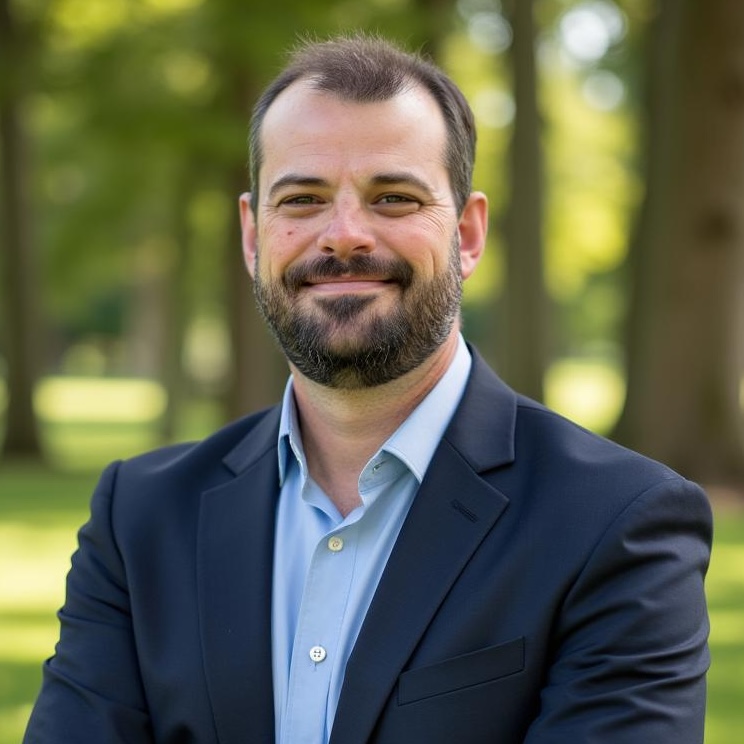
Ryan Gray
Executive Director of Technology Engagement and Strategy | Yavapai College (AZ)
Ryan Gray leads technology-forward experiential learning initiatives at Yavapai College, a rural community college in Arizona committed to delivering world-class educational experiences. Under his leadership, Yavapai has doubled down on immersive learning environments, in-house AV integration, and what the college calls a “radical acceptance of the future”, embracing AI and disruption as opportunities rather than threats.
Ryan operates at the intersection of pedagogy, technology, and institutional mission, building systems that prepare students for a workforce shaped by automation, AI, and constant change.
1. What’s a project or initiative you’re most proud of and why did it matter?
Ryan Gray: Our Center for Learning and Innovation is a two-campus investment by Yavapai College in technology-forward spaces to advance experiential learning. We’ve taken square footage that was once book stacks and turned it into collaborative, project-based, immersive learning environments.
Generative AI is making certain traditional assessments irrelevant very fast. If demonstration of learning is just writing an essay, that can now be done by something else. So demonstration of learning needs to transform in the same way business has transformed. When was the last time your boss asked for a six-page double-spaced essay? They want a slide deck. A quick presentation. A synthesis.
So we built podcast studios. Immersive spaces with projection and VR. Simulation environments that let students experience things that are too expensive, too dangerous, or out of reach otherwise. A nurse practicing in a white-walled classroom is different from practicing in a projected emergency room with sound and chaos. Those are different learning experiences.
The commitment here is that a rural community college can deliver a world-class, technology-enabled experiential learning environment. Our students deserve the same experience as anyone at a research-one institution. I can look people in the eye and say you can be at Yavapai College and have a learning experience as good or better than someplace you paid a whole lot more money for.
And alongside that, we’ve taken a stance of radical acceptance of the future. AI is disrupting education and business. Instead of being fearful, we’ve said if disruption is coming, we should be the disruptors. We have in our strategic plan to normalize and standardize the use of AI across college operations and teaching and learning. It’s challenging. There are moral questions. But if this is the world we’re going to live in, it’s our responsibility to prepare students for it.
“If disruption is coming, we should be the disruptors."
2. What do most people misunderstand about what higher ed AV professionals actually do?
Ryan Gray: Higher ed AV professionals have a larger breadth of responsibility than people think. But more than that, the decision-making process looks different because almost to a person, we choose to advance the mission of education.
Almost every AV professional could probably make more money outside of education. It’s a self-selected group. If you’re not bought into the mission, you won’t stay.
So when it looks like we’re making a non-corporate decision, or not choosing the cheapest option, peel back the layers. There are factors beyond the bottom-line number. Think of higher ed AV professionals almost as missionaries of the mission. That mindset explains a lot.
And for those of us active in industry organizations — HETMA, writing, conferences — we’re working two jobs. When we go to a trade show, we took vacation from our real job. We come back with follow-up to do, but also the campus work that piled up while we were gone. That volunteer structure keeps things authentic, but it also makes us a little more chaotic than the companies we partner with.
3. What’s a hard truth about classroom or campus AV?
Ryan Gray: The advancement of automatic configuration and tuning in AV gear is a good thing.
Is it going to make some traditional skill sets less central? Yes. And that’s okay.
If we can deploy a conferencing system that auto-tunes and gets 90% of the experience with minimal time investment, that doesn’t mean we lose value. It means we gain time. Time to focus on the truly unique projects. The custom builds. The high-profile environments.
We should embrace what manufacturers can do to standardize repeatable systems. Then leverage the time and reliability that buys us to push the envelope where it really matters.
“Almost every higher ed AV professional could make more money elsewhere. We choose this mission.”
4. What’s a decision you’ve made that significantly improved outcomes for faculty and students?
Ryan Gray: We are an in-house integration firm.
We buy boxes. We design. We program. We build. We install. We support. We do it on purpose.
We’re in a rural area. There isn’t a local integrator. So the capability was built internally before I arrived, and we’ve doubled and tripled down on it.
Right now, we have seven CTS holders at a rural community college. We have two certified Crestron programmers here. The things we design and build, we live with alongside our users. If there’s a problem, the person who wired it is here. The person who programmed it can adapt it.
If you compare our salaries apples-to-apples, they may look high. But our capital budgets are lower because labor for design and programming is in-house. I’d love industry folks to walk through our new project and guess our budget. I know it will be two or three times what we actually spent because of what we’re able to do internally.
5. What qualities do you look for in AV tools you trust at scale and why?
Ryan Gray: There has to be reliability and reputation. We treat AV deployments as enterprise IT deployments. We need monitoring, visibility, and the ability to administer systems from anywhere at any time.
But beyond technical reliability, the biggest factor is this: who will answer our phone call?
If we have a problem, can I make one phone call and have something happening right away? Not an 800 number and a check-in process.
We’re not anybody’s biggest spend. But is our ability to bring the resources of that manufacturer to bear for our students high, medium, or low?
Even if it costs more — especially if it costs more — I will pay more for products from a company where we are on a reliable first-name basis. Where there are humans who will answer. Who want to help. Who will get on a call and ask, what do you need this to be?
Human reliability is just as important as technical reliability. People buy from people.