2026 SURVEY REPORT
State of Video Technology in Higher Ed
Most campuses are equipped for lecture capture. Only one in four are using it. Our 2026 survey of 253 AV and IT leaders shows where the gap comes from, what drives it, and the three decisions that close it.
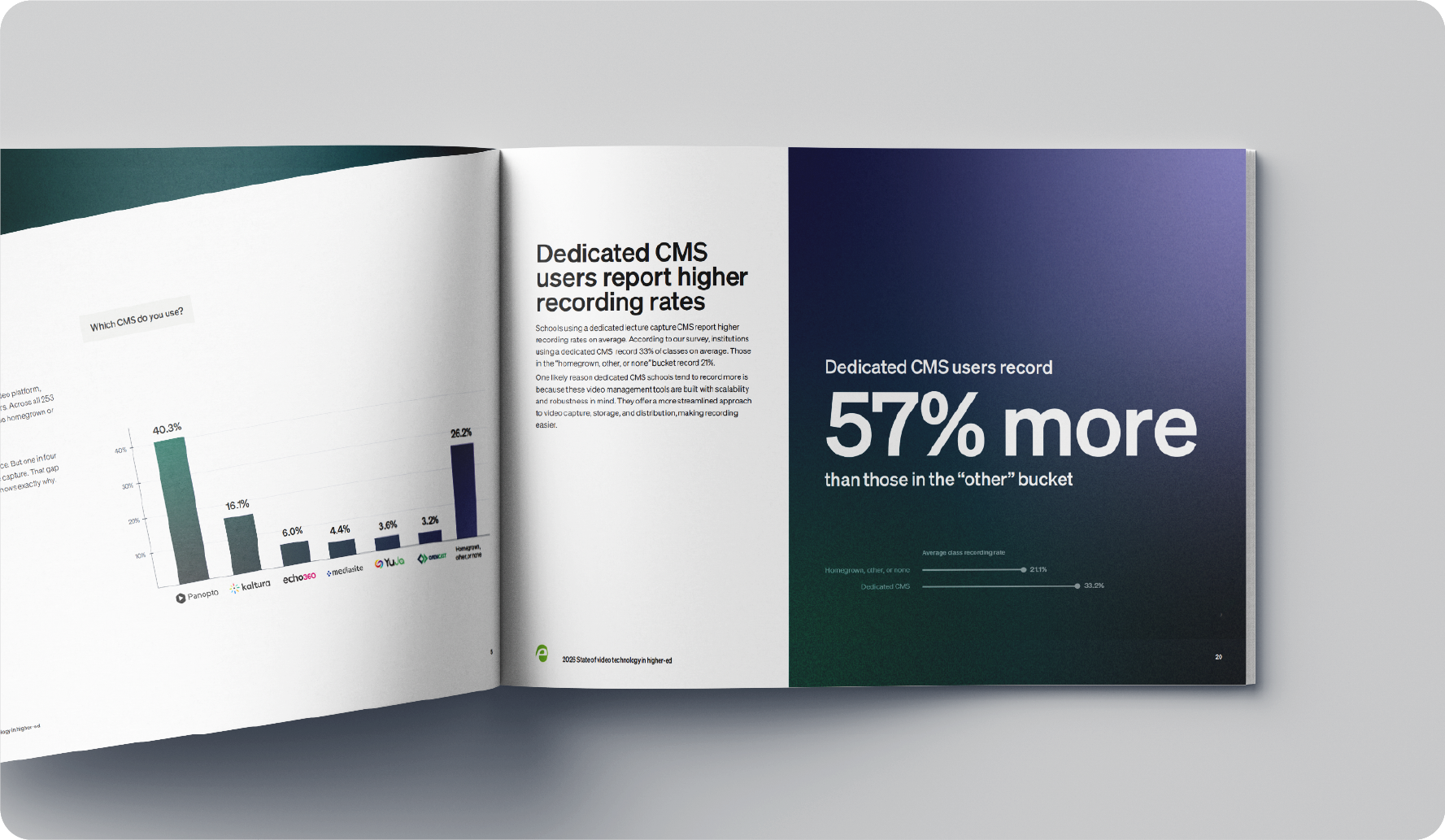
What's inside
-

Top trends shaping higher ed AV
Discover how schools are expanding their use of video, from lecture capture and hybrid classrooms to emerging use cases.
-
The hidden friction points
Get a better picture of where momentum is building, and where friction, hesitation, and policy gaps are slowing things down.
-

Data you can actually use
Clean visuals, clear charts, and sharp analysis offer an at-a-glance view into how video is transforming campuses today.
Report preview: The Utilization Gap
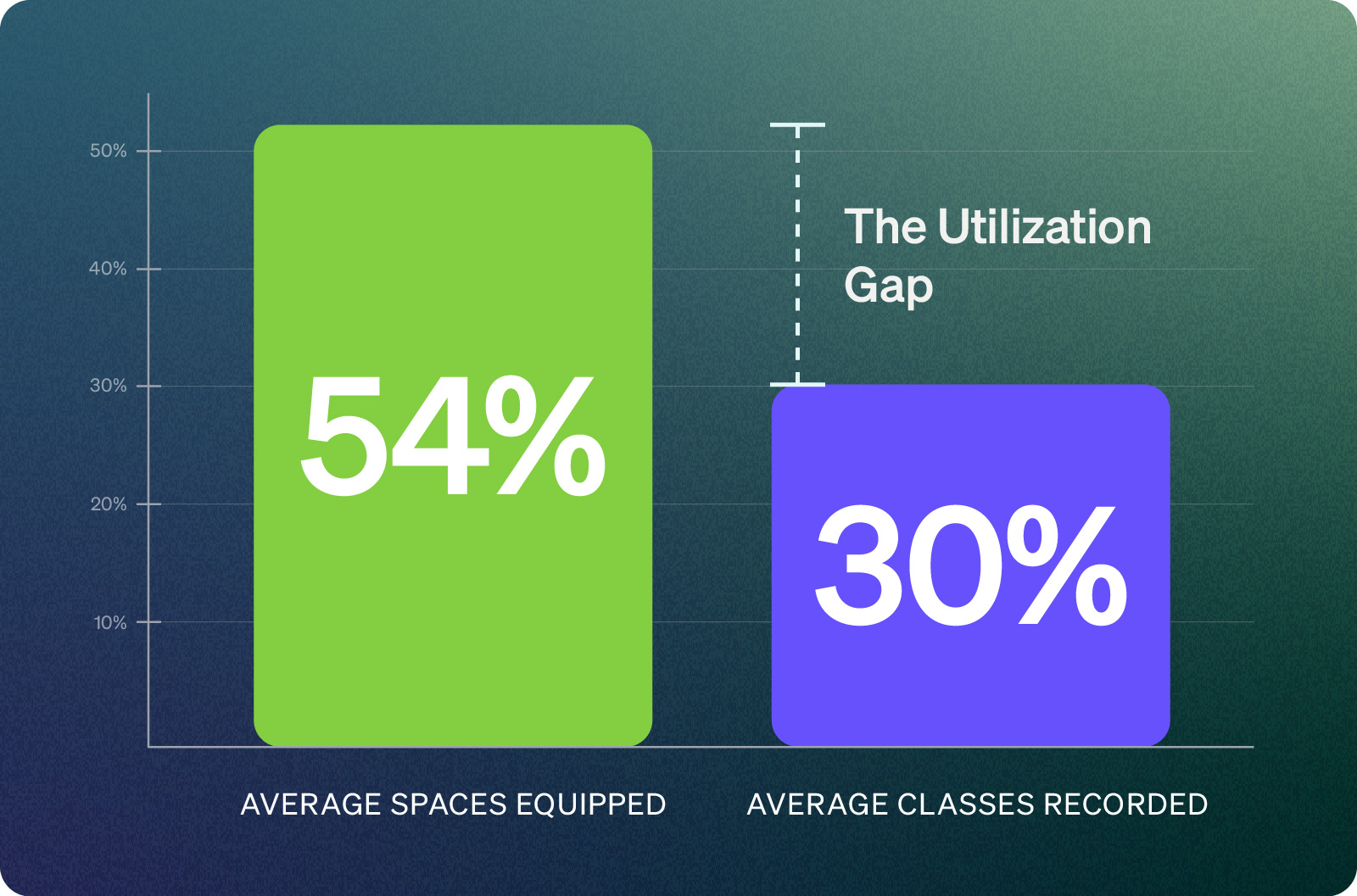
One finding kept surfacing across the data: campuses are equipping rooms faster than they’re using them. We started calling it the utilization gap.

Campus video infrastructure is near-universal
Lecture capture, hybrid classrooms, event streaming, remote learning: the core four are now standard infrastructure on most campuses. Almost no one we surveyed reports zero capture capability.
The question has shifted from whether to invest to whether the investment is paying off.
For most institutions, the honest answer is: not yet.
Having the infrastructure isn’t the same as using it
Most schools have built more capture capacity than they’re using. The pattern shows up clearly in the data:
- 54% of campus rooms are capture-ready, on average. Only 30% of classes actually get recorded.
- Just 25% of institutions record more than half of all classes.
- 53% of AV and IT pros say their school isn’t fully leveraging video.
The gap between equipped and recorded is real, and it isn’t shrinking on its own. The schools recording the most aren’t the biggest or best-funded. They’ve made deliberate choices to take friction out of the workflow.
How to close the gap, and why it pays off
The State of Video Technology in Higher Ed report turns those deliberate choices into data-driven findings you can act on. Inside, you’ll see:
- The three factors most strongly associated with higher recording rates
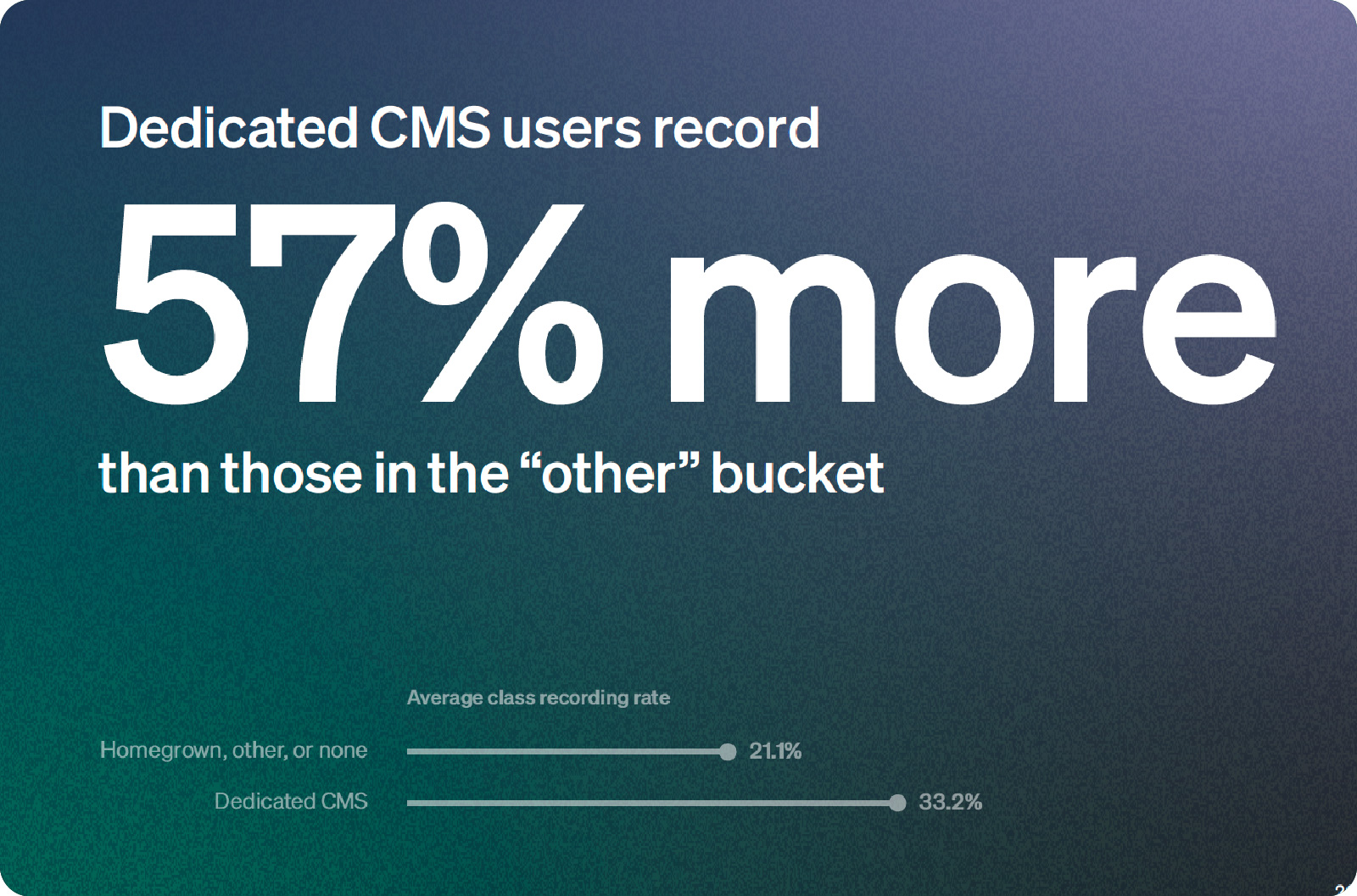
- How video CMS choice quietly shapes how much actually gets recorded
- The relationship between recording rate and program satisfaction
- Higher ed AV budget trends, faculty adoption patterns, and where AI fits into all of it
Get the 2026 higher ed video technology report
It’s free, fast to read, and full of concrete action items you can use this semester to strengthen your lecture capture program and make your case for next year’s budget.
2026 State of Video Technology in Higher Ed FAQ
Six findings drawn from a survey of 253 AV and IT leaders. Topics include lecture capture utilization, hardware deployment trends in higher ed AV, CMS market share, budget changes, faculty adoption, and AI applications in classroom video. Charts, action items, and methodology are all included.
Only 25% of institutions record more than half their classes. On average, three out of every ten classes get recorded, even though more than half of campus rooms are equipped for capture. The gap between coverage and utilization is one of the report’s central findings.
253 AV and IT professionals at 194 unique institutions across 12 countries. Most respondents (76.7%) work in the United States. Roles span specialists, managers, directors, and senior leadership. The survey ran between January and March 2026.
Yes. Submit your email and get the full report PDF.