The AV Spotlight Series features conversations with higher ed AV and IT leaders – built around direct questions that reveal candid perspectives and hard-earned lessons.
Behind the systems that power modern learning environments are professionals who are rarely visible, but deeply responsible. This series brings their thinking to the forefront: practical insight, unfiltered opinions, and experience shaped on the front lines.
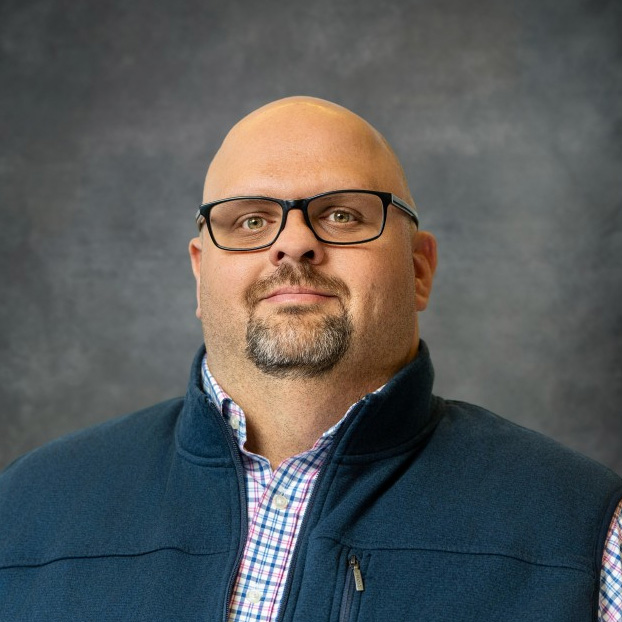
Teddy Murphy
AV Engineer, Dynamic Campus | University of Pikeville
Supporting professional schools, including the Kentucky College of Optometry and Kentucky College of Osteopathic Medicine. Teddy focuses on scalable AV architecture, lecture capture, and resilient AV-over-IP deployments. His work centers on aligning classroom technology with pedagogy while minimizing downtime and complexity.
1. What’s a project or initiative you’re most proud of and why did it matter?
Teddy Murphy: I would probably say our College of Optometry’s methods labs. They are used for simulation as well as education. We spent a lot of time working with the faculty to make sure that the new installation aligned with the pedagogy and the ability to capture. They did not have the ability to capture anything in these spaces prior to our install.
We also added capture in their surgical suites, so now they can record procedures that they can show to other students who weren’t there to see them.
As a whole, it was a large undertaking. Up to that point, it was the largest single project that I’ve worked on since I’ve been at the university.
2. What do most people misunderstand about what higher ed AV professionals actually do?
Teddy Murphy: A lot of people think we just fix projectors, fix TVs, and apparently push carts around. That’s a big misunderstanding.
We’re trying to translate the faculty intent into execution. There’s a lot that goes into classrooms and lab spaces that people take for granted – until it doesn’t work.
3. What’s a hard truth about classroom or campus AV?
Teddy Murphy: There is such thing as too much technology in a room.
If a faculty member has to think too hard about how to use a room and make it work, it becomes a barrier instead of an enabler to teach.
We try to have as much done in the background, like capture scheduling in advance, so the teacher can come in and just teach. They don’t have to worry about how to utilize the space.
There is such thing as overcomplicating and putting too much technology in the room. Faculty will just stop using it, and it causes them to not be able to teach.
“A lot of people think we just fix projectors, fix TVs, and apparently push carts around. That’s a big misunderstanding. We’re trying to translate the faculty intent into execution. There’s a lot that goes into classrooms and lab spaces that people take for granted – until it doesn’t work."
4. What’s a decision you’ve made that significantly improved outcomes for faculty and students?
Teddy Murphy: Making the transition to AV over IP, along with implementing Epiphan lecture capture appliances.
Most of our classrooms didn’t have any technology that could allow for capture. As we started implementing AV over IP, adding microphones, and deploying lecture capture appliances, we were able to deploy at scale.
We have fewer points of failure and a more resilient system as a whole. Especially using Epiphan appliances and Q-SYS, there’s so much that can be done remotely. There’s less running around campus to find problems. Most of the time, it can be corrected remotely.
Ever since we started making these decisions, downtime has reduced dramatically. By having less downtime, students have more faith that their study materials will be there. Faculty have confidence that their sessions are going to be recorded, and they can just teach when they walk into the room.
5. What qualities do you look for in AV tools you trust at scale and why?
Teddy Murphy: Remote monitoring, network and security transparency, and reliability.
They’re consistently being used day after day for many hours a day. They need to perform reliably without failure. Because failure could lead to me not having a job.
I also look to make sure that it aligns with pedagogy: how faculty are teaching and what they’re teaching. Sometimes people use devices in ways they weren’t necessarily designed for in education, but we find a use case for it.